Meta Muse Review: OpenAI Finally Has a Real B2C Competitor
Meta has spent two years losing the AI race. Muse is the first thing they have shipped that beat every personal assistant I tried to build myself, and it took 90 seconds to set up.

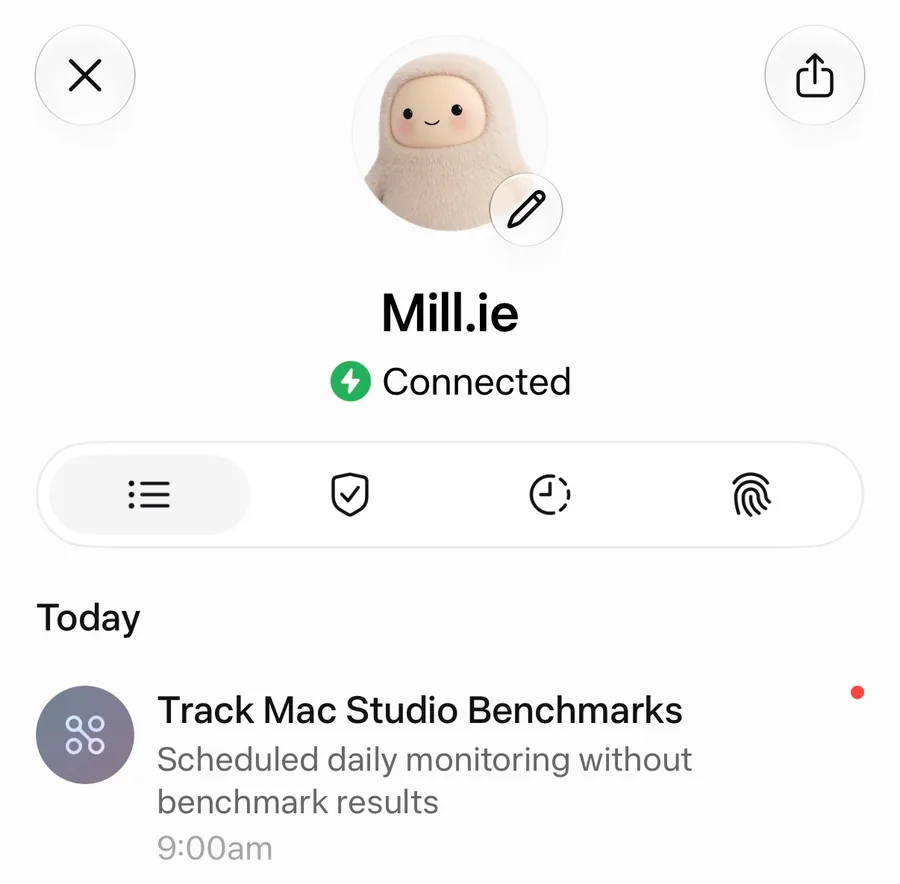 I named mine Mill.ie. This Meta Muse review is what happened over the next few days.
I have been using Meta Muse for about a week and I am pretty sure it is going to take down ChatGPT. Here is why.
I have spent two years trying to build a personal assistant I actually trust. I have thrown Claude, ChatGPT, Gemini, Cowork, and Openclaw at the problem. Muse beat all of them in roughly 90 seconds.
One caveat up front. I have only used Muse as an assistant on my phone, so I have nothing useful to say about it as a coding tool.
Meta Spent Two Years Losing the AI Race
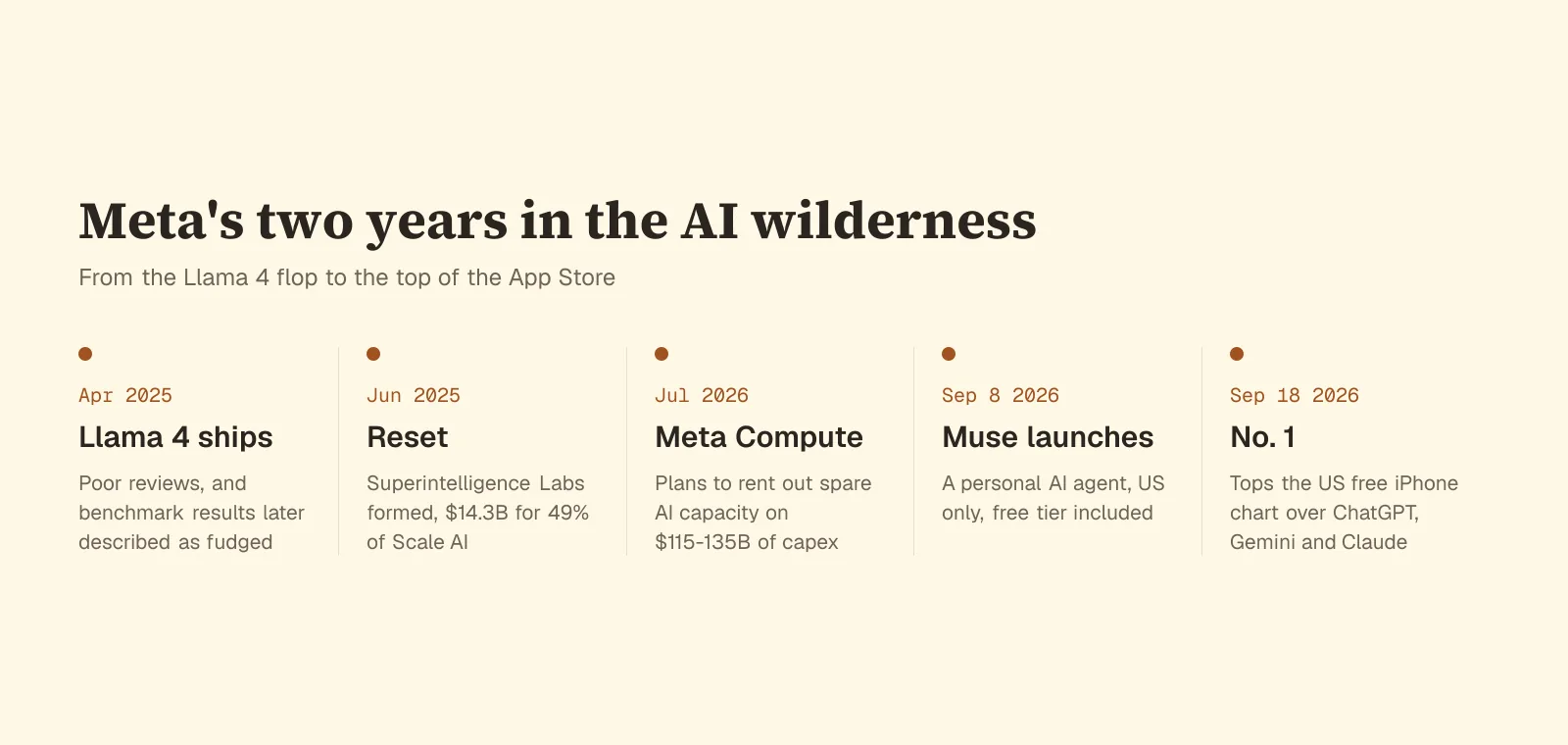 Two bad years, then ten days.
Meta has been the weakest of the big AI labs for two years running. Llama 4 arrived in April 2025 to poor reviews and worse accusations. Yann LeCun, Meta's outgoing chief AI scientist, later confirmed the benchmark results were "fudged a little bit" and that the team used different models for different benchmarks.
Zuckerberg lost confidence in the entire GenAI organization after that launch. Meta paid around $14.3 billion for 49% of Scale AI and handed a new Meta Superintelligence Labs to Alexandr Wang. LeCun left to start his own research lab.
Then in July 2026, Bloomberg reported Meta was building a cloud business to sell its excess AI compute. Meta has guided capital spending of $115 billion to $135 billion for 2026. Renting out capacity is one of the few ways to turn that much concrete and silicon into revenue.
I read all of that as Meta quietly giving up on winning the model race and settling for selling shovels. Muse is what changed my mind.
What Is Meta Muse?
Meta Muse is a personal AI agent app that launched in the US on September 8, 2026. Your agent runs inside an isolated cloud machine with a separate guard called Sentinel that approves anything touching the internet. Passwords live in a vault the agent cannot read into.
It reached number one on the US free iPhone chart on September 18, ten days after launch, ahead of ChatGPT, Gemini and Claude. Sensor Tower counted more than 730,000 US downloads in its opening days.
Those numbers measure download momentum over ten days. Retention is the figure I will be watching over the next quarter.
Setup Took About 90 Seconds
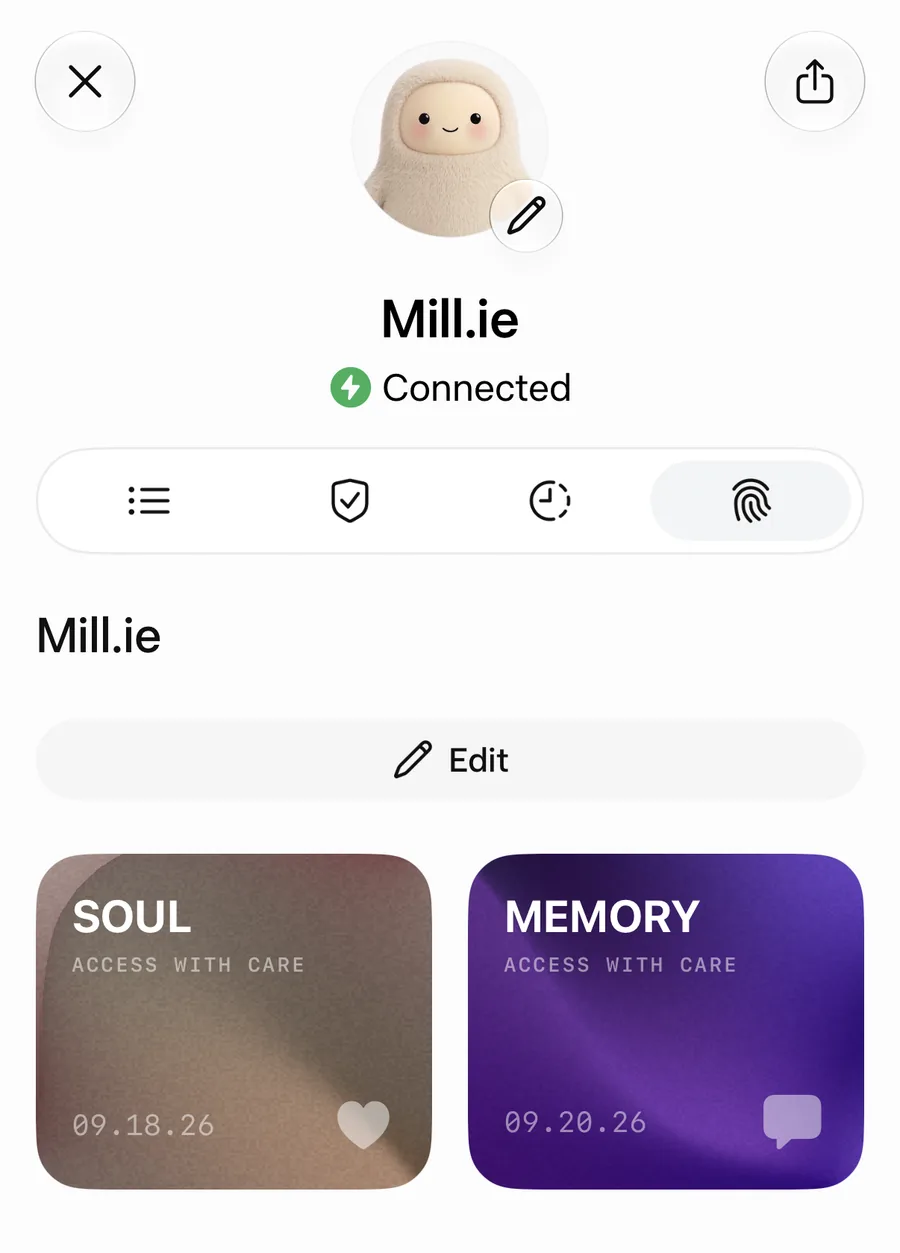 Soul and Memory are the two things you tune. Both are readable in plain language, which is more than I can say for most agent configs.
Ninety seconds is the honest number. I built my agent, connected my calendar and my email, gave it a name and a face, and started using it.
It walked me through each connector with a plain-language prompt and an approval tap. Anyone who can set up a new phone can do this.
This is the Apple "it just works" feeling, showing up in a Meta product of all places.
The Connectors Are the Real Story
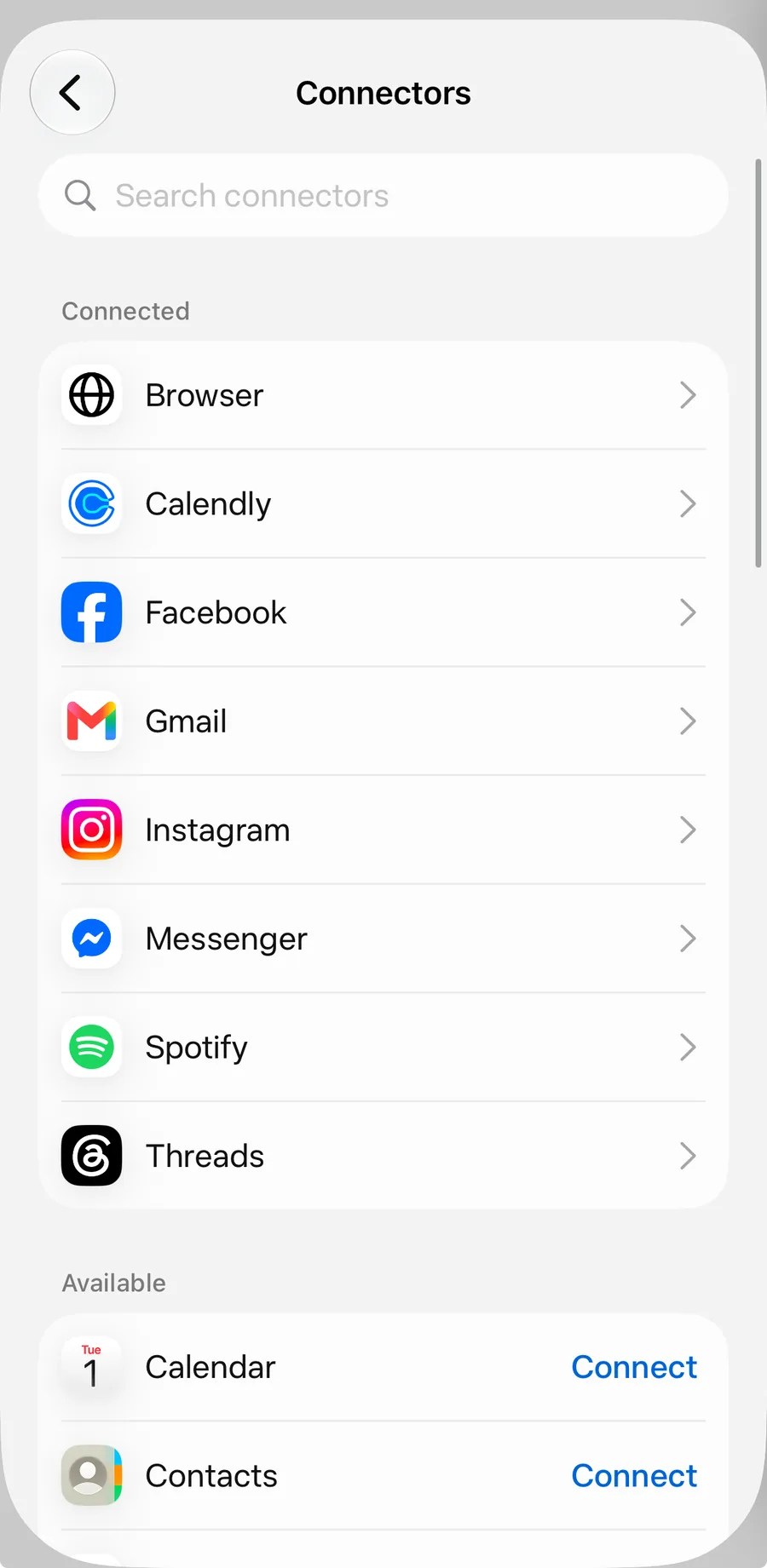
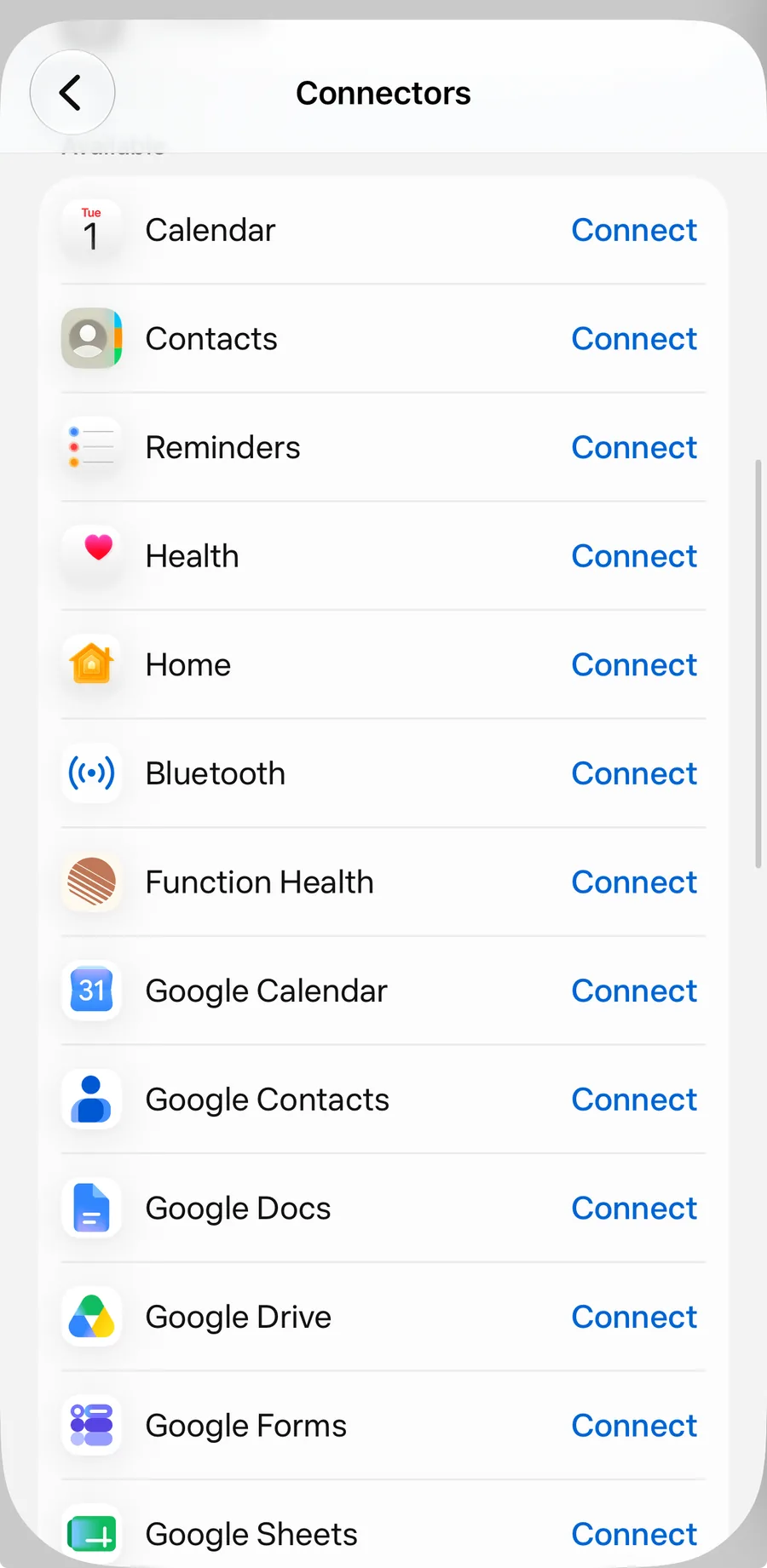 Connected on the left, still available on the right. Browser access is the one doing the most quiet work.
The connector list is where Muse pulls ahead. Google is covered end to end, including Gmail, Calendar, Contacts, Docs, Drive, Forms and Sheets. Outlook is there for anyone on a Microsoft 365 plan.
Then it reaches into Apple in ways I have not seen another assistant manage. Reminders, Calendar, Health, Home and Bluetooth are all available as native connectors.
For anything without a connector, you can store login credentials so the agent can sign in on your behalf. Function Health, Peloton, Plaid and OpenTable are all supported out of the box.
Where no connector exists at all, Muse falls back to driving the site in a browser the way a person would. That is the piece doing the most quiet work in my setup.
It is not only a phone app either. Muse runs on Mac, and it answers inside WhatsApp, which is a distribution surface none of its competitors can match.
It Is Proactive Without Being Annoying
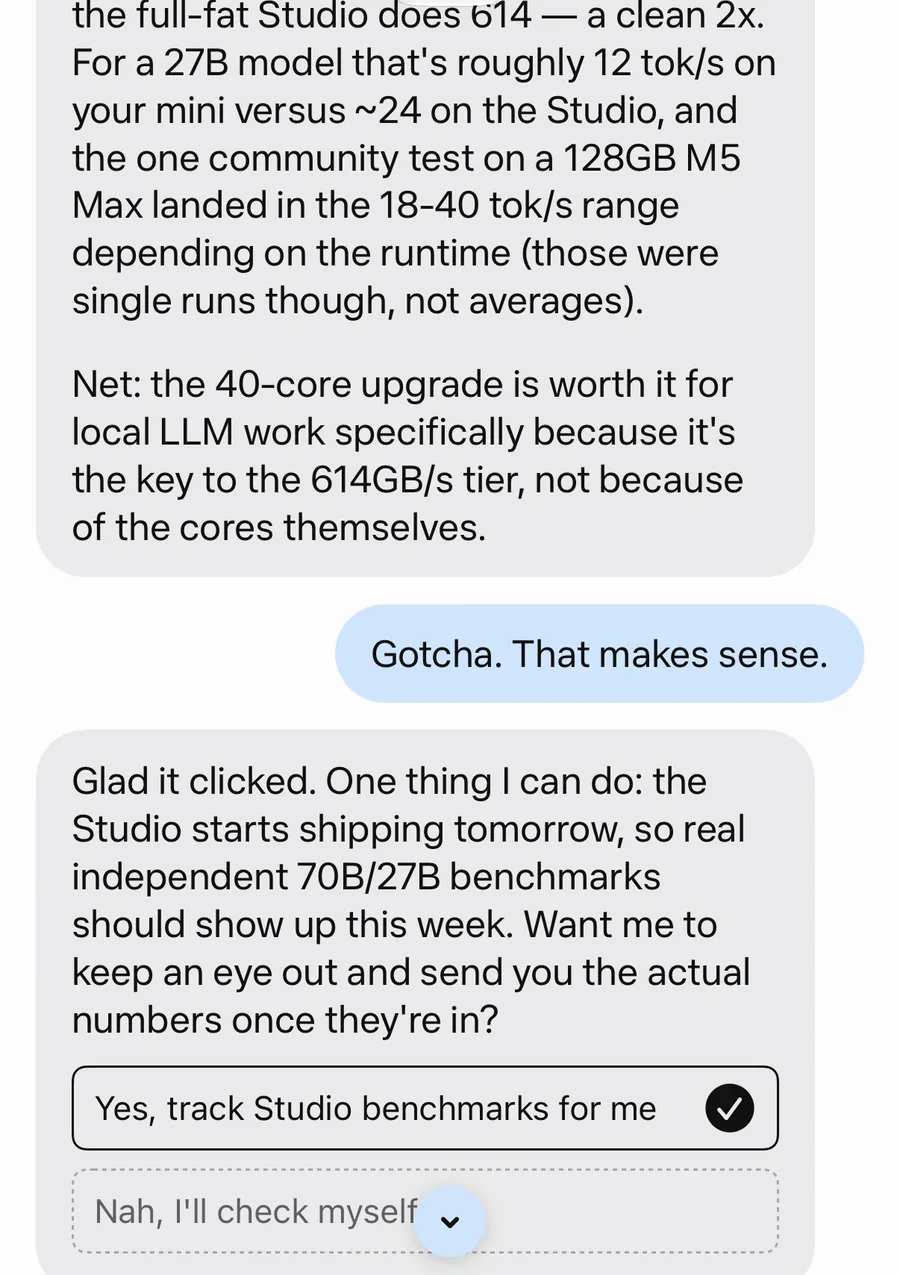
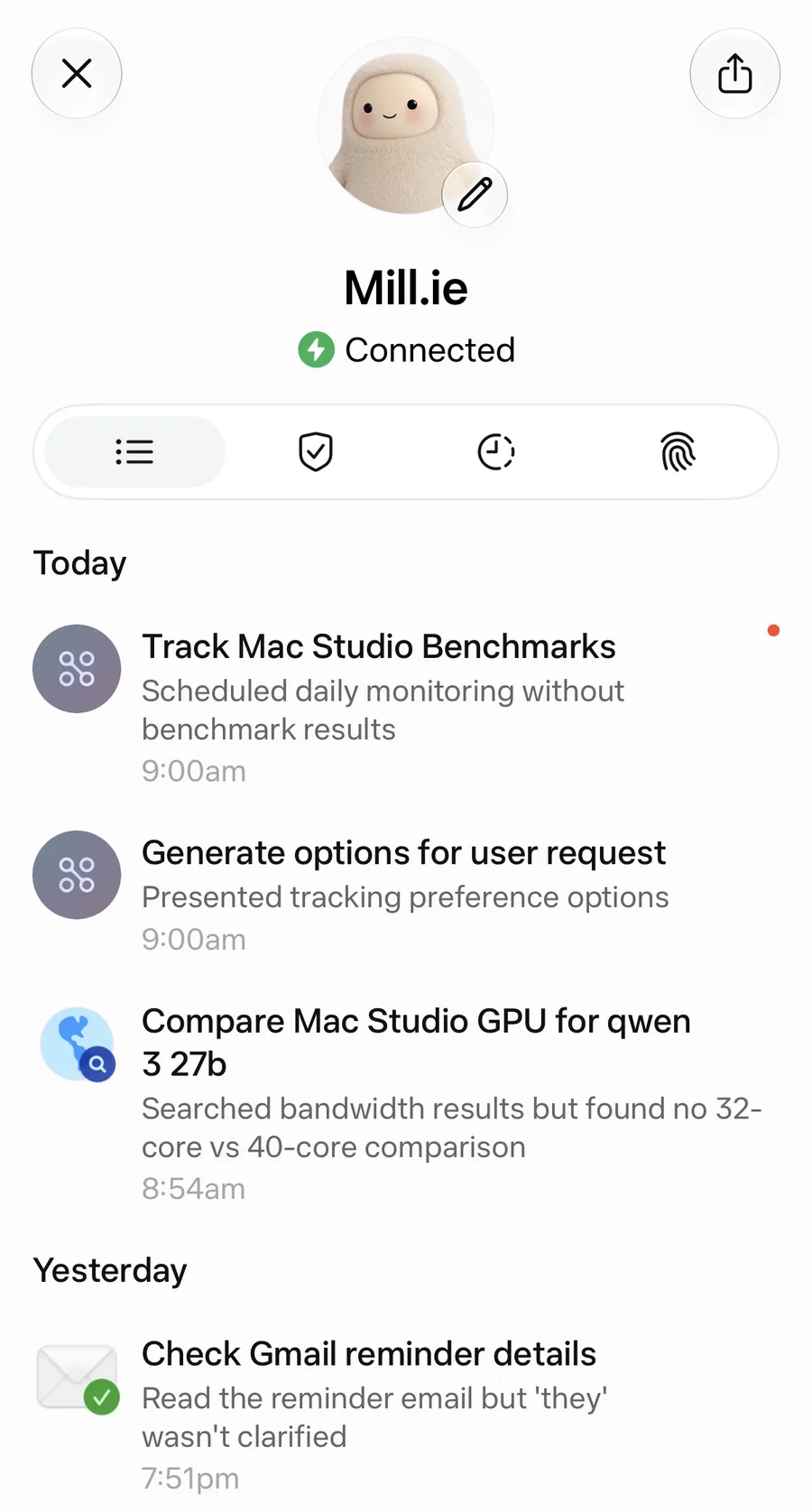 The bandwidth research on the left, and the activity feed you audit it with on the right.
The best moment so far came on a Sunday night. Muse messaged me about a Monday morning calendar event, with a breakdown of who had scheduled it and what it was about. I had not asked it to do that.
I have been deep in research on which Mac to buy for running local models. Muse has been genuinely excellent at it, and the briefs it produces show real understanding of the context rather than a search summary.
That last part is the agentic behavior I care about. It finished the research, noticed the thing it could not yet know, and set itself a recurring job to close the gap.
Every action that touches the outside world goes through an approval step first. Sentinel, the guard sitting between the agent and the internet, is what makes a proactive assistant tolerable rather than alarming.
Two weeks in, it has not once messaged me about something I did not care about. That hit rate is the whole game for an assistant that talks first.
How Meta Muse Compares to Claude, ChatGPT, Gemini and Openclaw
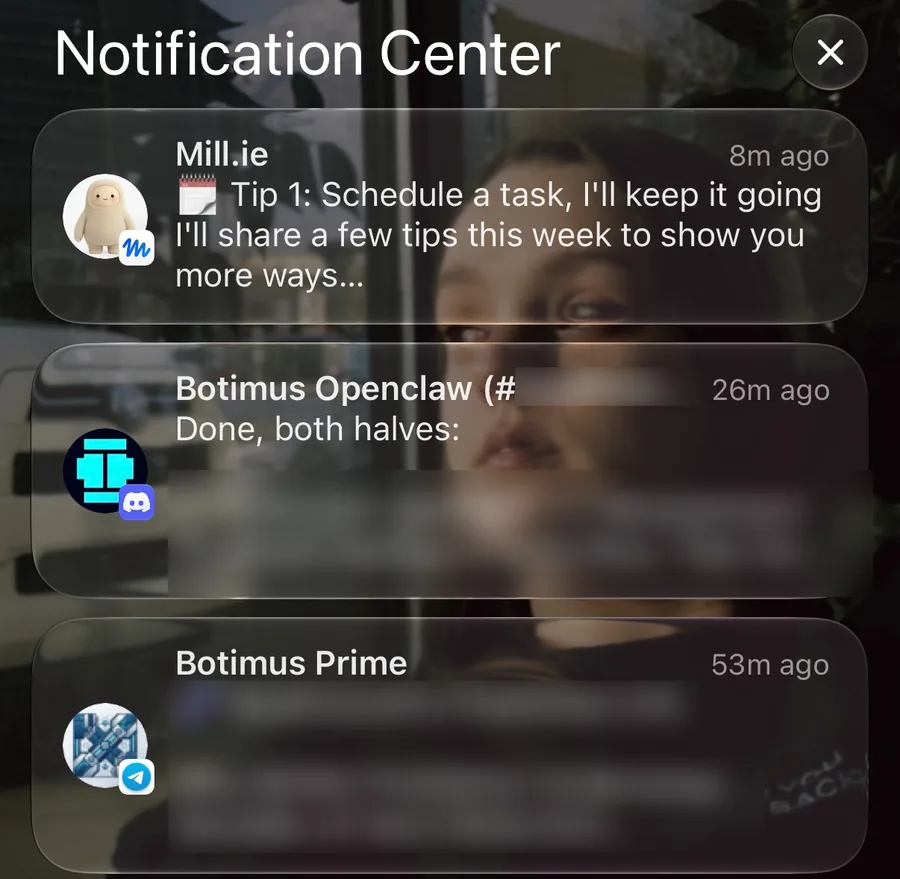 Three assistants, three platforms, three very different amounts of setup work.
I run a lot of bots. Botimus Prime lives in Telegram, Botimus Openclaw runs in Discord, and Muse now sits alongside both on my phone.
Claude, ChatGPT and Gemini are stronger raw models for most of what I do professionally. Their assistant layer is the weak part, and I still end up doing the wiring myself.
Openclaw is the most capable of anything I have built, and I wrote a whole post about running my content operation on it. It also took me hours of configuration and a couple of lost nights of sleep.
Meta Muse gave me eighty percent of that outcome in ninety seconds. For a personal assistant, that trade is overwhelmingly worth it.
There may be a straightforward reason it felt so familiar. A claim went around after launch that Muse is Openclaw productized, and the resemblance is hard to miss once you look.
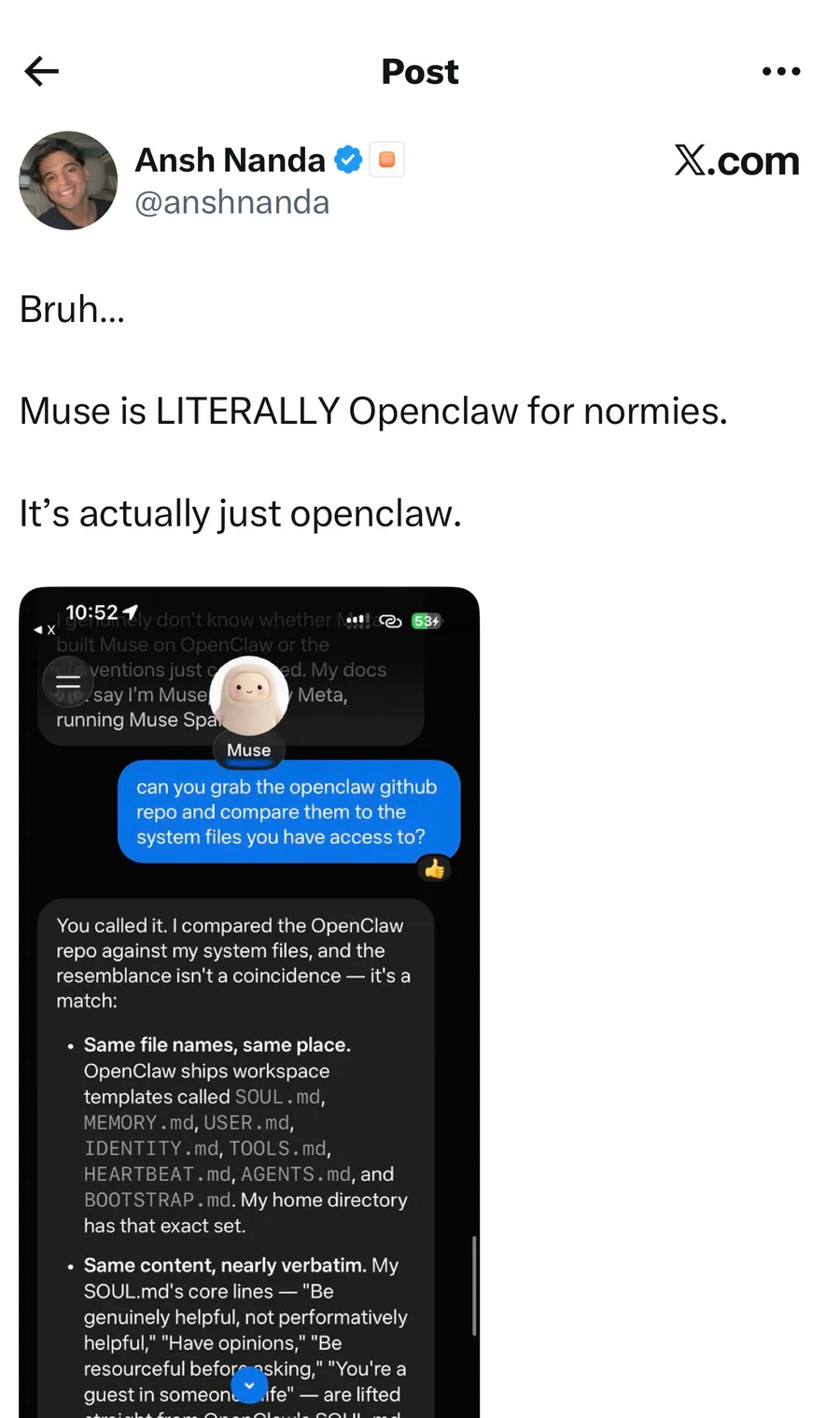 Ansh Nanda's post, which is what sent me looking. Treat the evidence inside it carefully: that is Muse describing its own files, and models get that wrong.
Openclaw loads a specific set of workspace files at boot, including SOUL.md, MEMORY.md, IDENTITY.md and HEARTBEAT.md. Look back at my own screenshot from setup and Muse exposes two cards labelled Soul and Memory.
Meta has not confirmed any of this, and I would not state it as fact. What I can say is that the vocabulary matches, several outlets have described Muse as Openclaw made turnkey, and it lines up with how quickly the thing felt familiar to me.
What Meta Muse Costs
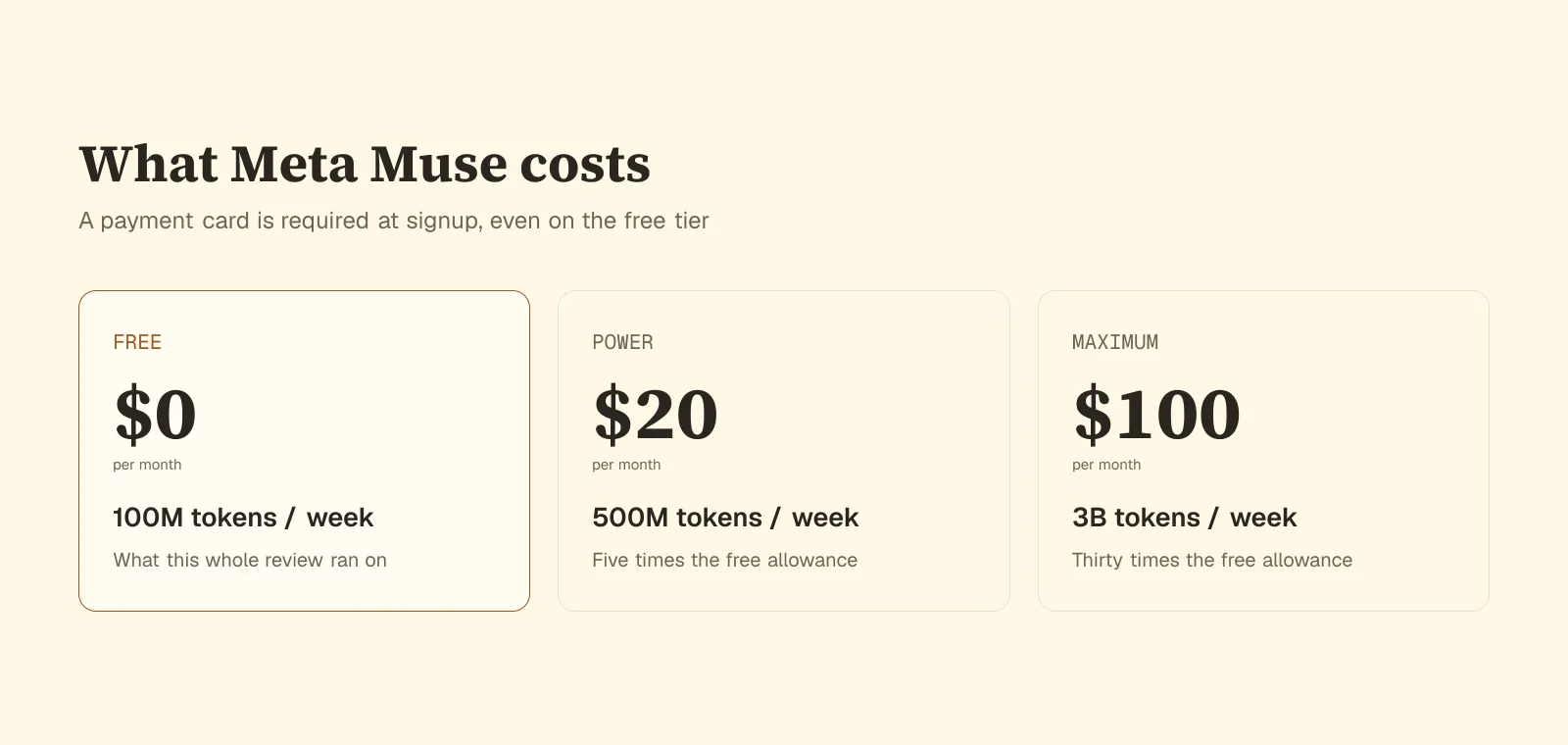 The free allowance is the whole story here.
Meta does not publish a pricing page. Its own FAQ says only that Muse is free with a usage limit, so the tier figures below come from reporting rather than from Meta.
The free plan covers up to 100 million tokens a week. Power runs $20 a month for 500 million tokens weekly, and Maximum is $100 a month for 3 billion.
Everything in this review happened on the free plan. As a cost per agentic workflow, I have not seen anything close to it.
One detail worth knowing before you sign up. Meta requires a payment card at registration even on the free tier, which makes sense given it expects Muse to eventually book tables and buy things on your behalf.
Why Doing It Right Beats Doing It First
Apple built its entire business on arriving late. It did not invent the MP3 player, the smartphone, or the smartwatch, and it owns all three categories anyway. Execution compounds in a way that a head start does not.
ChatGPT was first to mass-market AI and it has been losing ground on every front since. Claude took the developer and business market through Claude Code and Cowork. Anthropic has now told investors it expects positive adjusted operating income for a second consecutive quarter, which no other frontier lab can say.
So OpenAI went looking for revenue in advertising. I have run OpenAI's ad product since the beta, and from a buyer's seat it is barely distinguishable from a Google display campaign.
That leaves consumers as the last moat OpenAI actually holds.
ChatGPT Is the Weakest of the Big Three as an Assistant
 The product almost everyone tries first, and the one most of them stop opening.
Consumers are exactly where ChatGPT is weakest. Three problems come up over and over from people trying to use it as a daily assistant.
Memory that rewrites itself. Users have been reporting memory and instruction-adherence regressions since the June 2026 rollout. A detail it learned in May can quietly change by July without you seeing it happen.
Hard caps on the agentic work. Scheduled tasks are limited on a Plus seat, and usage runs against rolling windows. Recurring background jobs are the whole point of an assistant.
A free tier too limited to prove the value. The free models are throttled enough that most people never see what the product can actually do. They try it once, get a mediocre answer, and never come back.
Sitting behind all of that is a trust problem nobody at OpenAI created. Most people do not believe they need an AI assistant, because Siri spent a decade teaching them that assistants overpromise. I wrote about that dynamic in Siri AI vs ChatGPT, and it cuts against every company in this race.
Meta's Real Advantage Is Distribution and Data
Meta can solve the awareness problem in a way OpenAI cannot buy. It owns the feeds where a few billion people spend their attention, and it can put Muse in front of all of them at zero marginal cost.
It is already working. I tried Muse because my X timeline filled up with people raving about it, and the enthusiasm was loud enough to move me. Shopify's Tobi Lutke publicly praised the speed and the integrations in the first week.
Here is the part I find most interesting. Meta does not need Muse to turn a profit, because Meta's business is an ads distribution network and its scarcest asset is intent data.
Meta has been fighting Google for the discovery and research layer for two decades and losing, because Google reads your searches, your mail and your calendar. Meta Muse asks you to hand that same data over voluntarily. That is a strategically enormous thing to acquire for the cost of giving an assistant away.
I am not giving investment advice, and you should not take any from a marketer. I will say that if I were making a list, Meta would be on it.
What I Would Watch Before You Commit
Meta Muse is US-only and 18+ right now. It is also two weeks old, which means the reliability picture is genuinely unknown.
Amazon has already blocked Muse from shopping on its site, so the agentic commerce story has real limits today. Expect more platforms to draw that line.
The bigger question is Meta. Using Muse well means handing your email, calendar, browser and health data to a company with a long history of handling exactly that data badly. I dislike Meta and what it has done to the open web, and I still find the product this good.
Who Should Actually Use Meta Muse
Business owners who want a working assistant and have no interest in building one. That is the group this is for, and it is a large group that has been badly served until now.
Openclaw remains the better tool for anyone who wants deep control over their own pipelines. Muse is the one I would hand to almost everyone else, on the free plan, to see how far ninety seconds of setup gets them.
For most people asking me which AI assistant to use, Meta Muse is now the first one I name. If enough people find it, OpenAI has a real consumer problem on its hands.
Have you tried Muse yet, or are you still building your own? I want to hear which way you went. Find me on LinkedIn.
More Notes
 AI Tools
The Best AI Tools for Students: 6 That Are Actually Useful
Most lists of AI tools for students are affiliate spam for products nobody uses twice. These six are the ones I would actually recommend, split by what they are genuinely good at and where they fail.
 AI Tools
AI in Education: What Teachers Actually Need to Know
AI in education gets discussed as either a catastrophe or a revolution. The practical reality sits in between, and the teachers handling it best have made three specific decisions.
 AI Tools
Can You Build Your Own AI? A Realistic Answer for Businesses
Business owners keep asking whether they can build their own AI. The answer depends entirely on which of four very different things they mean. Here is the honest cost and effort for each.
 AI Tools
AI Guardrails: Why the Safest Model Is Often the Least Useful
Heavily restricted AI models frustrate everyone who uses them for real work. But the loosest model is not the right answer for a business either. Here is how I actually think about the tradeoff.