Kindness in the Workplace: 3 Honest Lessons From a Bad Day at Work
I had a day at work where I wasn't kind, and I didn't like it. Here's what I've learned about kindness and respect as a consultant: listen first, ask for honest feedback and apologize often.

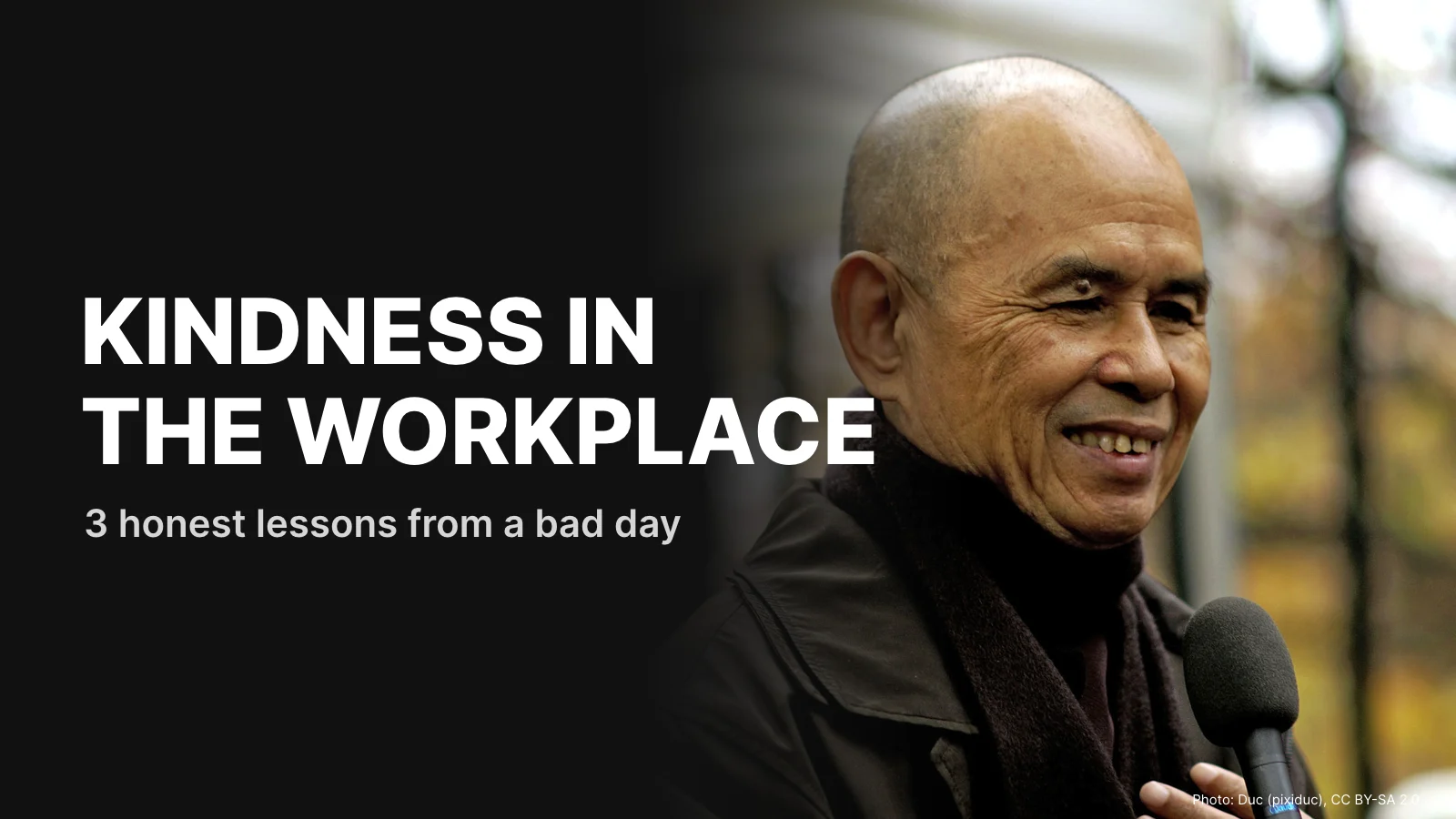 Thich Nhat Hanh, whose teaching on deep listening shaped how I think about kindness in the workplace. Photo by Duc (pixiduc), CC BY-SA 2.0.

I had a day at work recently where I wasn't kind. I was short with people. I wasn't respectful in my conversations, and I made a few people feel like they didn't matter to me.
On the drive home I replayed every conversation. I didn't like how I'd treated people. I didn't like how I'd talked to them. Most of all, I didn't like how I'd made them feel.
Kindness in the workplace is a value I try to run my business on. That day I treated it like an optional extra. So this post is partly a reminder to myself, something I can come back and reread. It's also what I've learned about kindness and respect as a marketing consultant.
Why does kindness in the workplace matter for consultants?
Kindness in the workplace matters for consultants because almost everything we deliver gets judged in a meeting. Clients have to tell you what's wrong with your work. You have to tell them what's wrong with their marketing. When kindness and respect drop out of those conversations, honest information stops flowing too.
Most of us have sat through a meeting where being right mattered more than being decent. Kindness and mutual respect got set aside so someone could win the point.
There's a place for prioritizing what's right for the business. I do it every week. You can deliver the hard recommendation and be kind and respectful in how you deliver it. Those two things belong in the same conversation. It's the same reason I treat clients as partners, which I wrote about in what running ads for dozens of clients taught me.
The hard part is that every client gives and takes feedback a little differently. What feels kind to one person feels vague to another, and what feels honest to one feels rude to the next. Agency people have a shorthand for that gap.
How do East Coast and West Coast clients give feedback?
If you've worked at a marketing agency, you've probably heard it. East Coast clients are direct. West Coast clients are gentle. Both ends of the spectrum are hard to work with in their own way.
East Coast clients tend to give feedback fast and blunt. They're comfortable interrupting and talking over each other. That makes for tough meetings when you only get 30 to 45 minutes to present. Questions get asked before you reach the slide that answers them. If you're a creative or a consultant who's sensitive to harsh feedback, it can sting.
West Coast clients usually listen patiently. They cushion their feedback. The tradeoff is they can be less clear about what they actually want and need. You leave the meeting feeling good and a little unsure what to do next.
It's a generalization, and plenty of clients break it. Kindness in the workplace looks a little different with each one. Either way, my job is to figure out how each client gives feedback, then model what a kind and respectful conversation looks like for both of us.
Whichever kind of client is across the table, I keep coming back to the same three habits. They're the three things I let slide on my bad day, and the three I'm working hardest to get right.
 Thich Nhat Hanh's calligraphy: breathe, smile. Photo by Bill Damon, CC BY 2.0.

Lesson 1: Listen more than you talk
Respect shows up most in what you do, especially when you aren't the one talking. Listening well is the skill that actually nurtures a client relationship. It tells the other person their view matters before you've said a word about your own. It's also the first part of kindness in the workplace to go on a bad day.
Thich Nhat Hanh, the Zen teacher whose work I've always appreciated, taught a practice he called deep listening. In his conversation with Oprah, he described it as listening with one purpose: helping the other person empty their heart. You let them say everything they need to say without interrupting or arguing.
Most people spend way too much time talking and not enough time listening. I'm on that list on my bad days.
 A bowl of tea offered across the mat at a Japanese tea ceremony. Photo by KuboBella, CC BY-SA 4.0.

Lesson 2: Ask for the hard feedback out loud
Listening also means noticing who will struggle to give you honest feedback. Some clients worry that criticism will come across as rude, so they soften it until it's useless. When I spot that person, I tell them directly that I want their real reaction to the work.
What I say goes something like this:
"I need you to know that honest feedback and real criticism matter more to me than my feelings about what I made. My first draft is never going to be 100% right. I need you to help me figure out what the next draft should look like. That's the whole purpose of this second call."
That script gives polite clients permission to be direct. It also turns the review call into a shared job. We're both working on the next draft together. That's kindness in the workplace at its most practical.
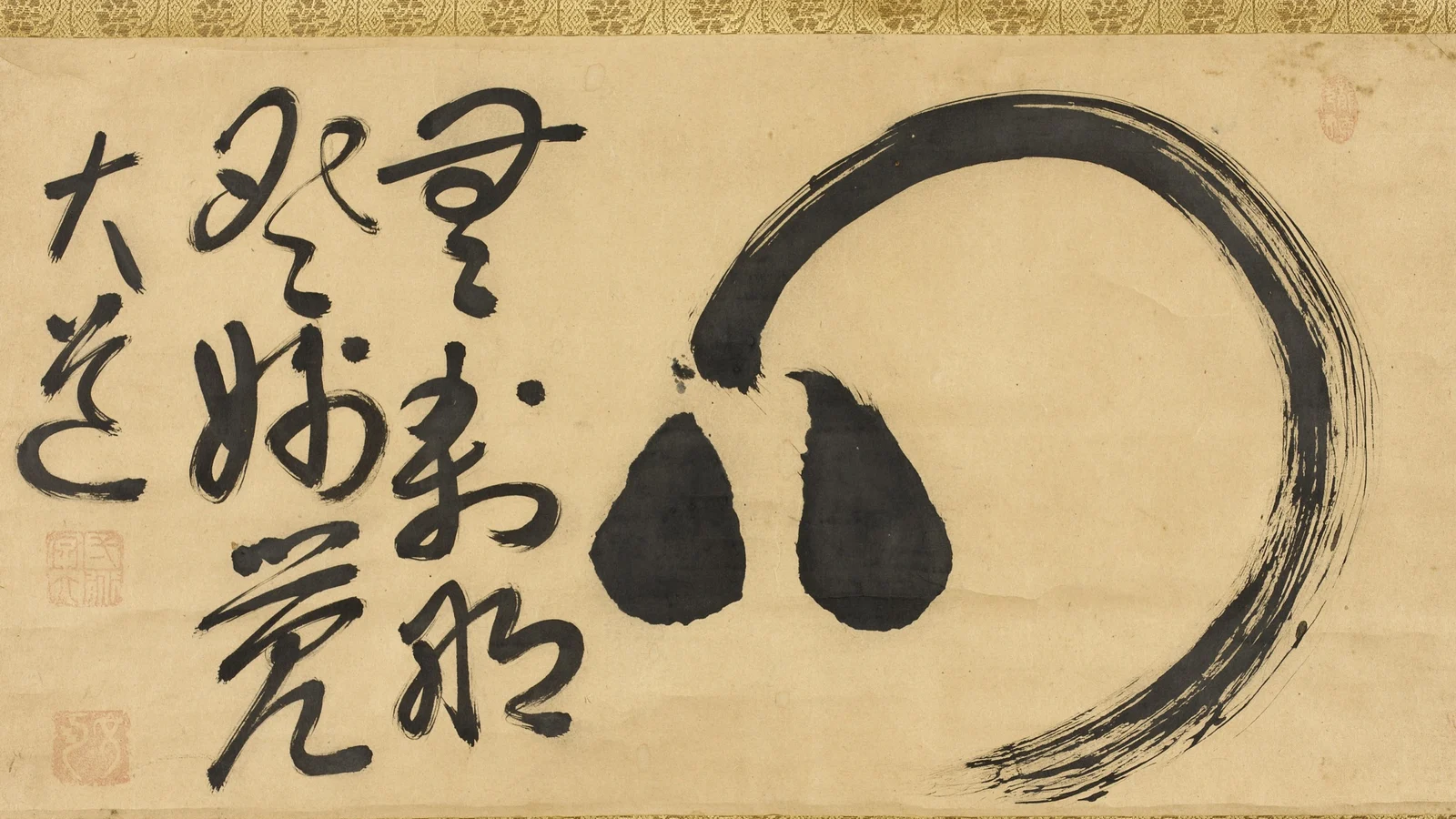 An ensō, the Zen circle that is never quite closed. Daidō Bunka, The Character for Heart-Mind as an Ensō, 18th century, Los Angeles County Museum of Art, public domain.

Lesson 3: Apologize often, and mean it
Nobody gets kindness in the workplace right every day. Everyone has rough days. When you catch yourself acting in a way you're not proud of, apologize quickly and sincerely. Own the fault, explain what you were trying to do, and give the other person room to respond.
Here's one of mine. One evening after a frustrating day, someone asked me for something I'd already finished. I could have kindly pointed them to where it was. Instead I responded with something like, "I've literally already done this. Why are you asking me to do it again?"
I'm very accomplishment driven. I like getting things done, and I hate redoing a finished task unless the criticism feels valid. That trait makes me productive. It also makes me a little hostile to feedback sometimes.
What I've learned is that I can treat my own hostility with kindness too. When the frustration slips out, I apologize. I tell the person what I was trying to do and why. Then I give them a clear way to respond.
Does being kind at work actually work?
Being kind at work works most of the time, but I'd be lying if I said it worked 100% of the time. Some conversations still go sideways. Some clients still talk over the whole presentation. I still have days I'm not proud of, and this post exists because of one.
Even when it falls short, kindness at work is how I want to treat the people I work with. That's what matters to me.
How I'm practicing kindness in the workplace from here
Three habits, all simple, none of them easy on a bad day:
- Listen first. Let the client finish before I defend the work.
- Ask for honest feedback out loud. Especially from the people who are too polite to give it.
- Apologize fast and sincerely. Own it, explain it, and leave room for a reply.
If you're looking for a consultant or a fractional CMO who will tell you the truth kindly and wants the same back from you, let's talk.
And if you've got your own East Coast vs West Coast client story, I want to hear it. How do you like your feedback delivered?
More Notes
 Marketing Strategy
The Marketing Workflows I Automate, and the Ones I Write Myself
I pointed a content automation system at my own website and let it run. It worked. Then I read a month of it back in one sitting and understood what I had actually built.
 Marketing Strategy
Should You Put Ads on Your Blog? An Honest Cost Breakdown
I put ads on my blog for a stretch and the revenue was not the point. Here is what display ads actually pay a small site, what they cost you in trust and speed, and the three cases where they still make sense.
 Marketing Strategy
Is Live Audio Worth It for Content Marketing? An Honest Answer
Twitter Spaces was going to change content marketing. It did not. But live audio did not die either, and there is a narrow case where it outperforms everything else I use. Here is when it is worth your time.
 Marketing Strategy
4 Guerrilla Marketing Campaign Lessons From a Computer Virus
The most effective guerrilla marketing campaign I ever experienced personally was a trojan horse computer virus. It was illegal and it was also a masterclass in distribution. Here is what it taught me that I still use legally.