AI Vendor Lock-In Is the Real Risk Right Now: 3 Smart Moves to Make
Anthropic is running Microsoft's old playbook on AI subscriptions, and the bill is coming. Here's what to do before AI vendor lock-in catches everyone flat-footed.

 Anthropic's new Claude Tag drops Claude into Slack like a coworker who never logs off. It is also the move that triggered me to write this.
Image: Anthropic, via their Claude Tag announcement.
Anthropic's new Claude Tag drops Claude into Slack like a coworker who never logs off. It is also the move that triggered me to write this.
Image: Anthropic, via their Claude Tag announcement.
A few days ago Anthropic shipped Claude Tag, a feature that drops Claude into your Slack like a coworker who never logs off. It is a great product. I am going to use it.
I also had a sinking feeling watching the announcement. It reminded me of something I have not thought about in years: the browser wars. And the more I sat with it, the more I am convinced we are watching a textbook setup for AI vendor lock-in, with Anthropic running the Microsoft playbook in fast-forward.
This is what AI vendor lock-in looks like in slow motion, and what I think you should do about it.
I've Been in AI Since the Original ChatGPT
I started using AI tools when GPT-3.5 dropped. I was at a digital marketing agency, building websites in WordPress and a few other CMS platforms. Whenever I needed a custom snippet, an HTML form, a quick table, I would paste my requirement into ChatGPT and get back code that worked most of the time. It was a useful time-saver.
That was three and a half years ago. It feels like ten.
Today I am not asking AI to write a form. I am building entire apps and websites with it. My side projects openclaw, Draftly, and MushroomPro all run on AI infrastructure that did not exist when I started. The technical barrier to building things has collapsed by something like 80%, maybe more if you know what you are doing.
AI is incredible. It also costs an obscene amount of money to operate, and that part most people do not see.
The Slack Move Is the Tell
On June 23, 2026, Anthropic launched Claude Tag, an integration that embeds Claude directly inside Slack. You tag @Claude in a channel and it shows up like a teammate. It accumulates context from your channel history. It chases down stale threads. With ambient mode on, it surfaces information before anyone asks.
I genuinely love this product. I also recognized the pattern.
This is the same move Microsoft made in the late 90s with Internet Explorer, when they bundled a browser into every Windows install and made it the path of least resistance. You did not really choose Internet Explorer. It was already there, and switching to Netscape was friction you did not want to take on.
Slack is the operating system of work for most knowledge workers today. Embedding Claude there makes Claude the default. Every team that adopts Claude Tag has one less reason to ever evaluate a different AI.
That is the play.
Why Is Claude So Cheap Right Now?
Because Anthropic is paying for most of it.
According to a recent breakdown from Zed Industries, the code editor whose pricing model is tied directly to Claude, Anthropic was subsidizing Claude subscriptions at roughly 15 to 30 times the cost of equivalent API usage before they pulled the subsidy back in mid-2026. Every dollar you paid for a Claude Pro or Max plan was buying you 15 to 30 dollars of model time at sticker price.
There is an active debate about what those multipliers mean. Some analysts argue the API price is itself marked up and the real cost-to-Anthropic ratio is closer to 1.5x than 15x. Either way, the directional fact is the same: Claude users are paying a fraction of what it costs Anthropic to serve them.
That cannot last forever.
American AI Costs Money Most People Don't See
This is part of why I build my agents the way I do.
For openclaw, my personal agent, I do not use Claude as the main model. I run a mix: Qwen Coder 2.5 locally on a Pop!_OS Linux machine, with cloud calls to GLM 5.2 when I need more horsepower. Claude gets the occasional call when nothing else will do.
The reason is cost. Chinese models like Qwen and GLM run at roughly 10 to 25 percent of the cost of American flagship models, for somewhere between 75 and 90 percent of the capability on most tasks. For an agent that runs continuously, that math matters.
I get the privacy trade-off. For my own agent, on my own machine, posting to my own LinkedIn, it is the right call. For client work where data sensitivity matters, I make a different choice.
The cost gap tells you something important. American AI is the premium product, and someone is going to have to pay the premium price eventually.
The Microsoft Playbook, Speedrun
Here is the strategic shape of the AI vendor lock-in Anthropic is building.
Ship a generally-better-than-the-competition product. Subsidize the price so adoption explodes. Embed yourself into the operating system of work, which today means Slack, Notion, Google Workspace, GitHub, every browser. Make your AI the layer everyone is already on.
Then, once switching costs are high enough that nobody can leave without months of re-tooling, normalize the real price.
This is Microsoft 1995 to 2005, compressed into a couple of years. Office became the default because IT departments standardized on it and nobody wanted to retrain. Internet Explorer became the default because it was already on the machine. The pricing got real after the lock-in was real.
The brand reputation Anthropic is building right now is fragile. They are the trusted, safe, responsible AI lab. That reputation will hold as long as they are subsidizing. The day they pull the subsidy is the day a lot of people remember they have other options. By then, hopefully for Anthropic, it is too late to leave.
In almost every company I work with, Claude is already in marketing, in engineering, in product, in finance, in operations. It is creeping into everything. That is the lock part of vendor lock-in.
3 Smart Moves to Make Now Against AI Vendor Lock-In
The leverage from AI is too big to opt out of. You still get to choose whether AI vendor lock-in catches you flat-footed or whether you walk into it on your own terms.
Three moves.
1. Skill up on AI, but diversify. Learn AI systems deeply, not just the one your company subscribes to. Build your own agent harness, even a small one. Run a model locally so you know what good and bad look like outside a single vendor's wrapper. If you ever have to migrate off Claude, you want to be the person who can do it.
2. Skill up without AI, too. Learn to code. Read the output your AI gives you and ask why it made the choices it did. The people who keep their leverage are the ones who understand what is happening under the hood. AI without judgement is just expensive output. I mapped out the fundamental skills I'd bet on in how to do marketing after the AI bubble pops.
3. Don't automate yourself away. Most business owners I talk to are racing to automate everything they can. My bet is the opposite. The people who win in the age of AI will be the ones who keep showing their humanity, their mistakes, their thinking on the page. The customers who pay a premium for that are the customers worth having when the AI price floor goes up.
What's Your Move?
If you read this and thought "he is wrong, the subsidies will hold," I genuinely want to hear that take. I might be wrong. I just remember what happened with Internet Explorer, and I do not want to be the person who skipped the warning twice.
How are you preparing for the day AI vendor lock-in stops being free?
More Notes
 AI Tools
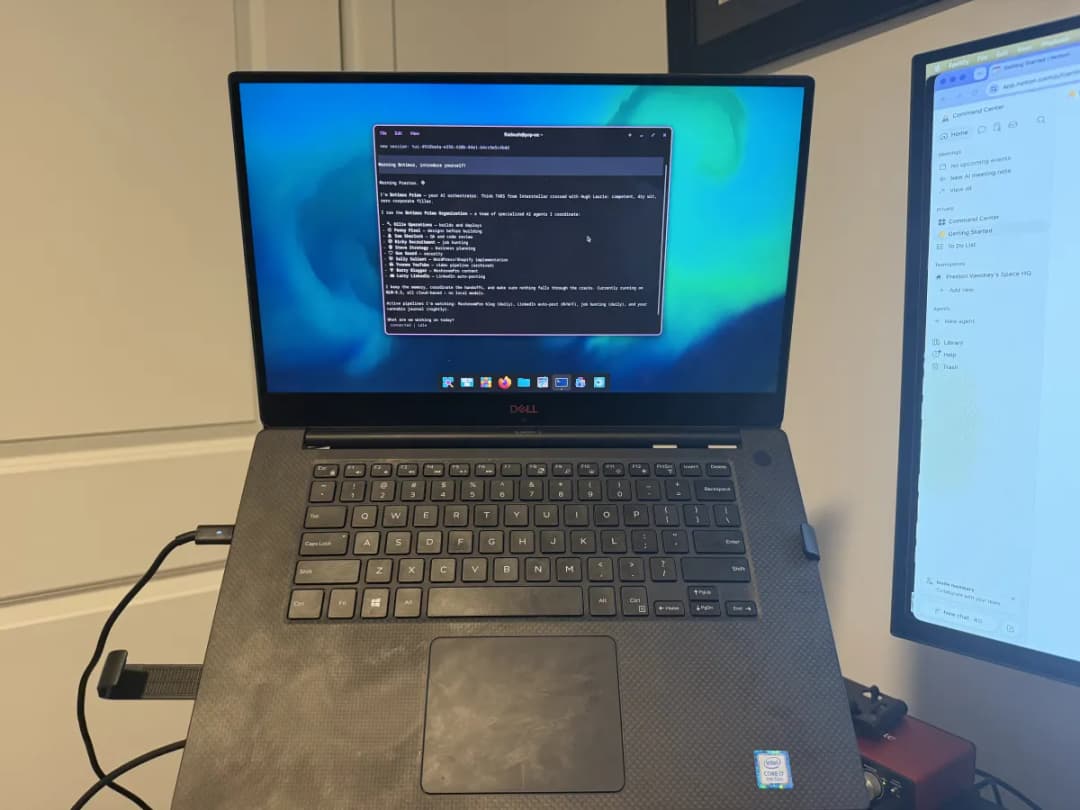
Building Openclaw: One Agent, Many Pipelines, Zero Mondays at a Blank Doc
Why I stopped trying to be consistent on my own and built an agent to run my owned-media operation instead. The boundary between me and Openclaw, and what it actually catches.
 AI Tools
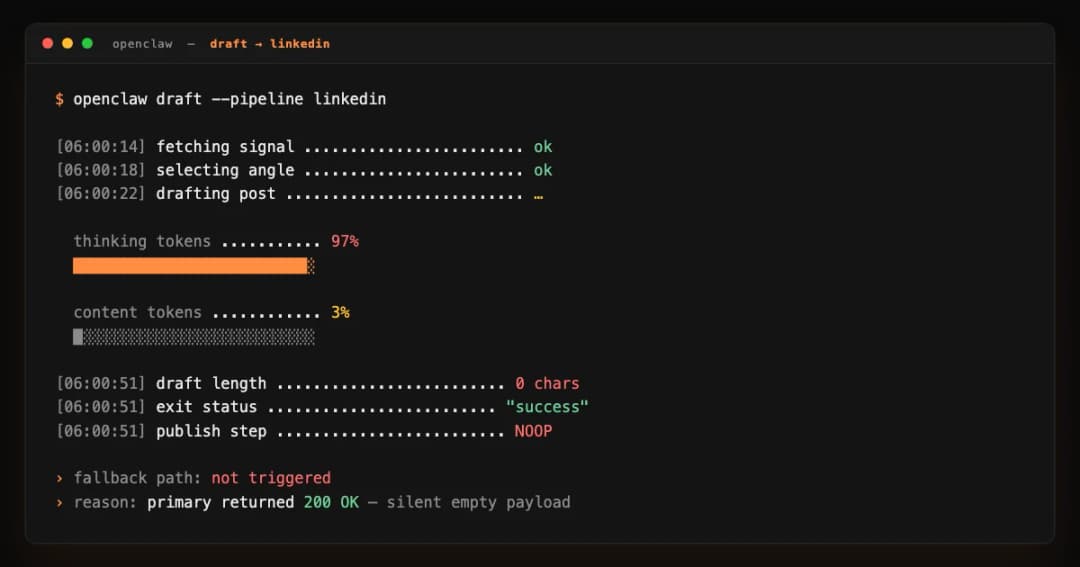
The Day My AI's 'Thinking' Ate 97% of the Token Budget
A debugging story about a pipeline that logged success and posted nothing. The culprit: a reasoning model that consumed almost the entire budget on intermediate thinking before the content tokens fired.
 AI Tools
Sonnet 5 Stress Test: What It's Good At, What It's Not, and How It Compares
A Sonnet 5 stress test across the work I actually do: coding, copywriting, and tool calling, plus cost against Opus 4.8, Sonnet 4.6, GPT-5.5, GLM 5.2, MiniMax M3, and Gemini.
 AI Tools
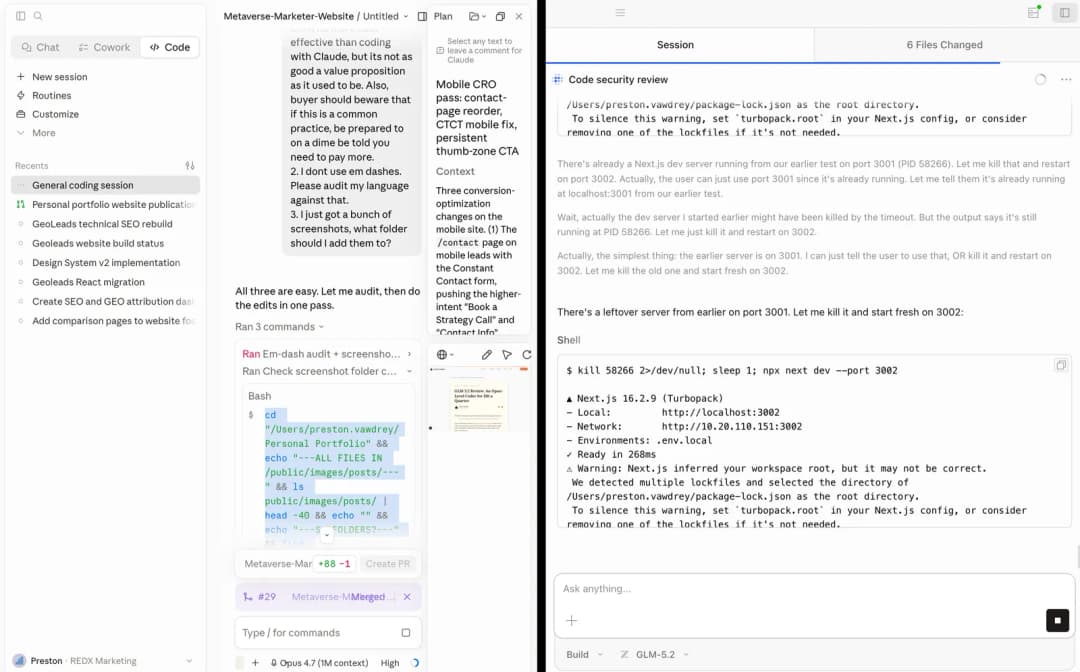
GLM 5.2 Review: My Honest Take After Daily Use vs Opus 4.7
A GLM 5.2 review after daily use against Opus 4.7, including migrating Draftly.blog across WordPress, Vite, and Next.js. The closest thing to Claude at any price.